
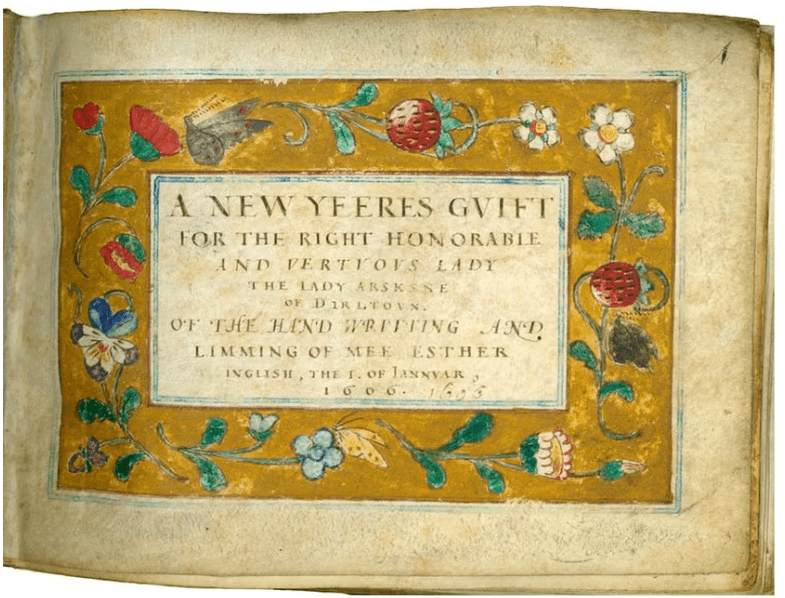
A New Years Guift for the Right Honorable And Virtuous . . . The Lady Erskine of Dirltoun. Newberry Library, Wing MS. miniature ZW 645.K29
Esther and her family had arrived in London in mid-1604, following the Stewart court. While there, she began experimenting with new materials, working for the first time in full colour and even trying what it was like to paint on vellum. During 1605, in preparation for the following New Year, she made three manuscripts in this medium, which had been widely used in the medieval period, but was now mostly found in special legal and royal documents. The recipients were all connected to the court of James VI/I: Robert Sidney, Earl of Leicester (and younger brother of the lamented Sir Philip Sidney); Lucy Harington Russell, Countess of Bedford (and noted patron of the arts), and Elizabeth Norris, wife of Thomas Erskine, Lord Dirletoun. Elizabeth, whose manuscript is seen above, was one of the wealthy English widows who married a Scottish courtier, matches that were promoted by King James.
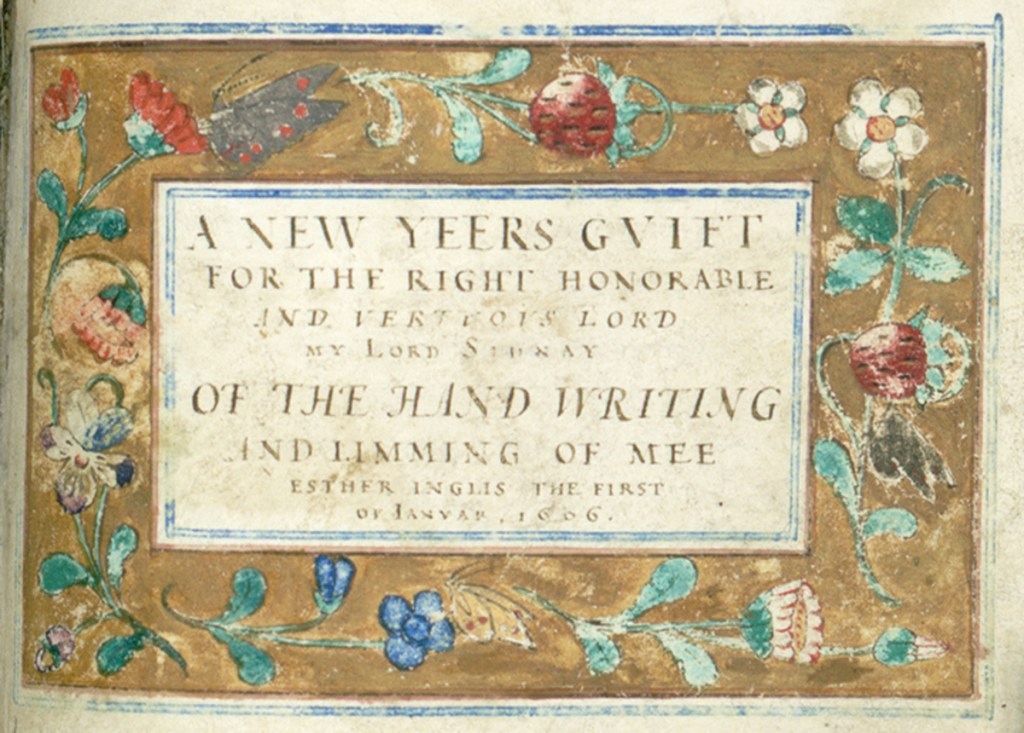
A New Yeers Guift For The Right Honorable And Virtuous . . . Lord Sidnay . . . . HRC, Pforzheimer MS 0126
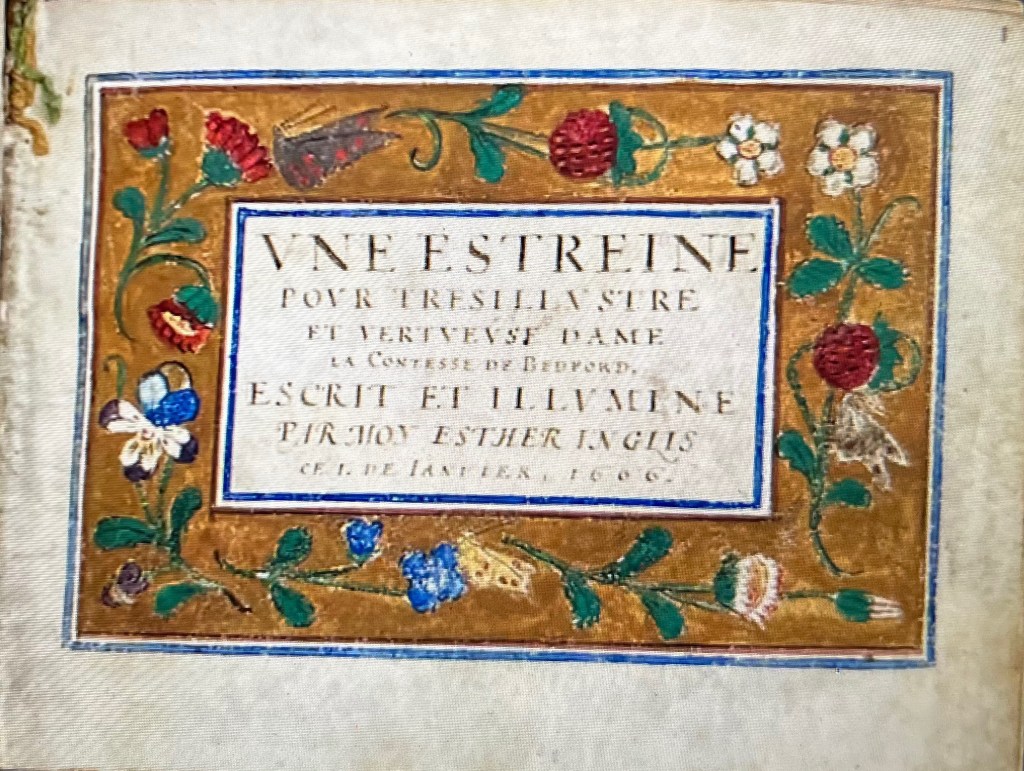
Une Estreine Pour Tresillustre Et Vertueuse Dame La Contesse De Bedford . . . NLS MS Acc. 11624 (Photo courtesy A.N.Pike)
The similarities among these three manuscripts indicate that Esther was streamlining her work, no doubt necessitated by having an infant and three other children needing her attention. All three use texts from the Book of Proverbs. If you compare the title pages, you’ll see that she copies the same patterns of flowers, fruits and moths, and she repeats designs on interior pages as well. All three manuscripts also contain the crossed calligrapher’s pens with the motto Nil Penna Sed Usus (“not the pen itself, but the skill in using it”) which she adapted from a handwriting manual by Jacobus Hondius.
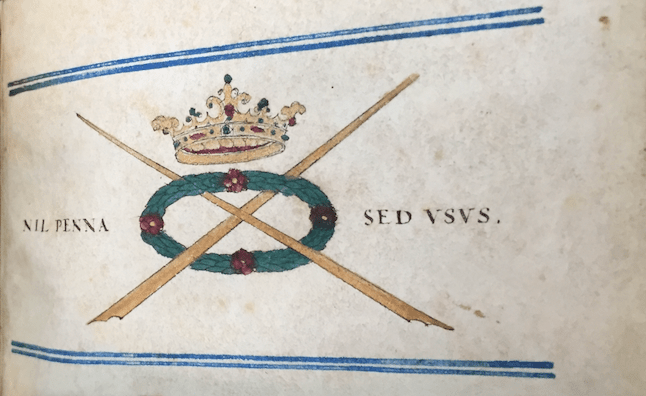
Newberry Library Wing MS ZW 645.K29 (Photo, GZ)
 Esther Inglis (c1570-1624): Calligrapher, Artist, Embroiderer, Writer